
Federico Zandomeneghi, En promenade
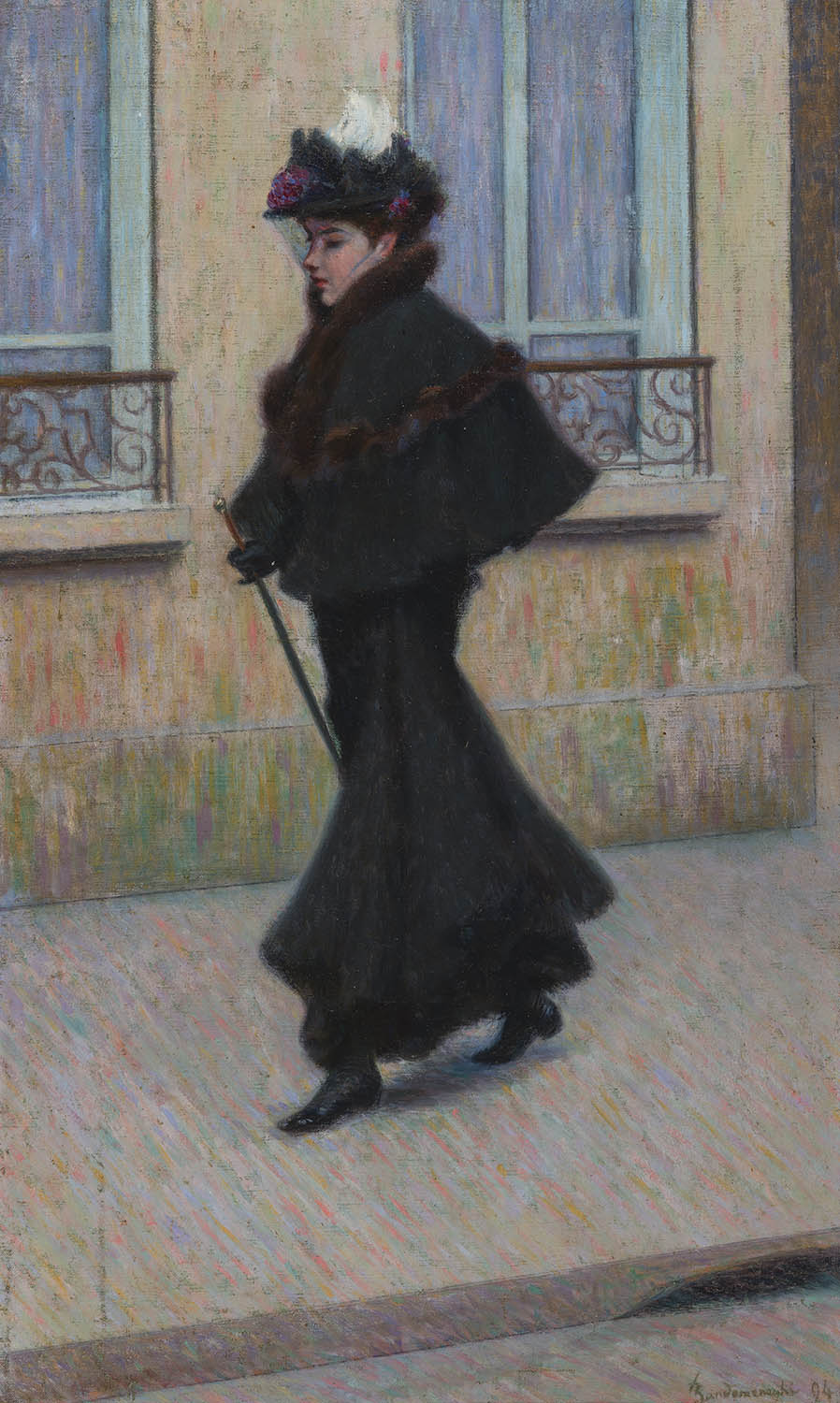
In January 1894, Federico Zandomeneghi signed an exclusive contract with Durand-Ruel, who was more in need than ever of a talented figure painter; Degas and Renoir had abandoned him to operate in full autonomy.
The contract allowed the artist to dedicate himself completely to painting, confident of an economic independence he had never known before. This gave rise to a copious series of paintings in which Zandò - as he was called by his French colleagues - developed a personal style that was to characterise a large part of his fin de siècle production, based on an all-female theme; graceful, collected, pensive, reinvigorated by calibrated compositions, lit up by red, blue, green and yellow tones that were bubbling or streamlined.
It is an eternal, particular femininity conceived by the Venetian painter, completely different from the dance ateliers and toilette interiors of Degas, distant also from Renoir's fleshy portraits of women who personify Venus in bloom or his laughing, out-of-town gatherings. Zandomenghi prefers to be a quiet narrator of the small bourgeois world. He does not paint goddesses or anonymous female figures; he paints real girls and women. The world that shines through his canvases is exquisitely sincere; provincial even though he portrays places and people in the Ville Lumière.
The novelty of certain themes dear to the painter, such as a conversation between two friends or, as in this case, a stroll outdoors, indicates a lively, delicate attention to the time that surrounds them. But attention is not only directed toward what he sees: Zandò also looks inside himself, "he hears mysterious calls of blood, echoes of the past, scents of a lost land. And in a curious process of fading, the images of late Italian romanticism overlap with those of Paris fin de siècle".
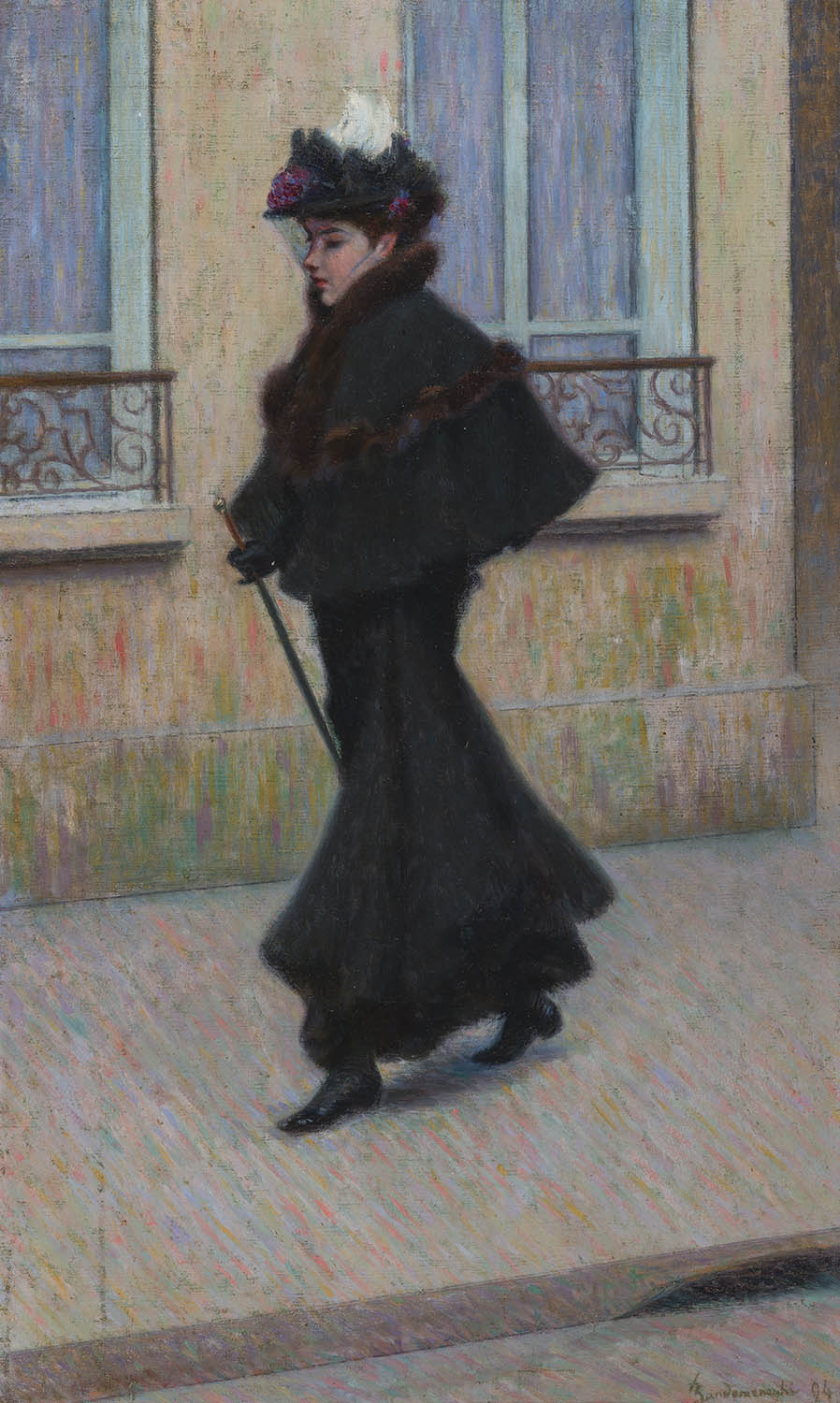
Federico Zandomeneghi
(Venice 1847 - Paris 1917)
En promenade (La Parisienne), 1894
Oil on canvas, 73 x 44 cm
Signed and dated bottom right: Zandomeneghi 94
Provenance
Paul Durand-Ruel, Paris (photo archive n. 2925); Alberto Baccolini, Buenos Aires; Enrico Piceni, Milan; Marco Innocenti, Milan; private collection, Milan