
Giulio Aristide Sartorio, Jerusalem. The Mosque of Omar, 1919-1920
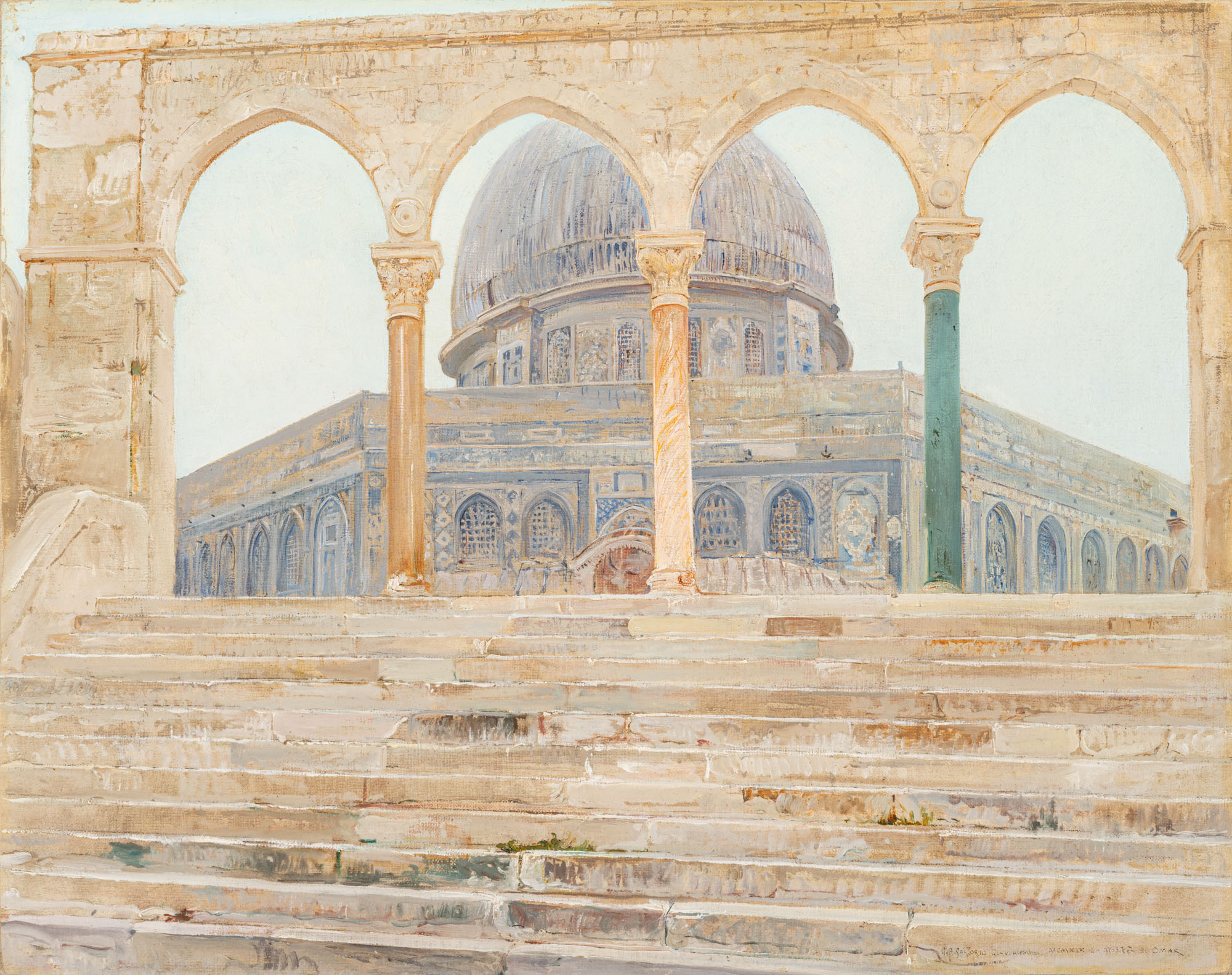
Giulio Aristide Sartorio visited Egypt in 1919, commissioned by King Fu’ad I to paint two portraits. He took the opportunity to also explore Syria and the Holy Land, and the places he visited became subjects of his pastels and paintings. In Jerusalem, he was particularly fascinated by the Mosque of Omar, which inspired the painting Jerusalem. The Mosque of Omar.


He offers a detailed and enthusiastic description of the mosque in an autobiographical article, especially struck by the magnificence of the aerial porticoes with their columns of jasper, Numidian marble, and ancient green stone. What is remarkable in the painting is precisely the way the artist rendered the columns, using precious colors to capture the varied textures of the marbles. This may have later inspired the change of title to Lapis lazuli when the work was exhibited at the Venice Biennale in 1930.
GIULIO ARISTIDE SARTORIO
(Rome, 1860 - Rome, 1932)
Jerusalem. The Mosque of Omar, 1919-1920
Oil on canvas applied to cardboard, 60 x 74 cm