
Federico Zandomeneghi, Place Pigalle in Paris
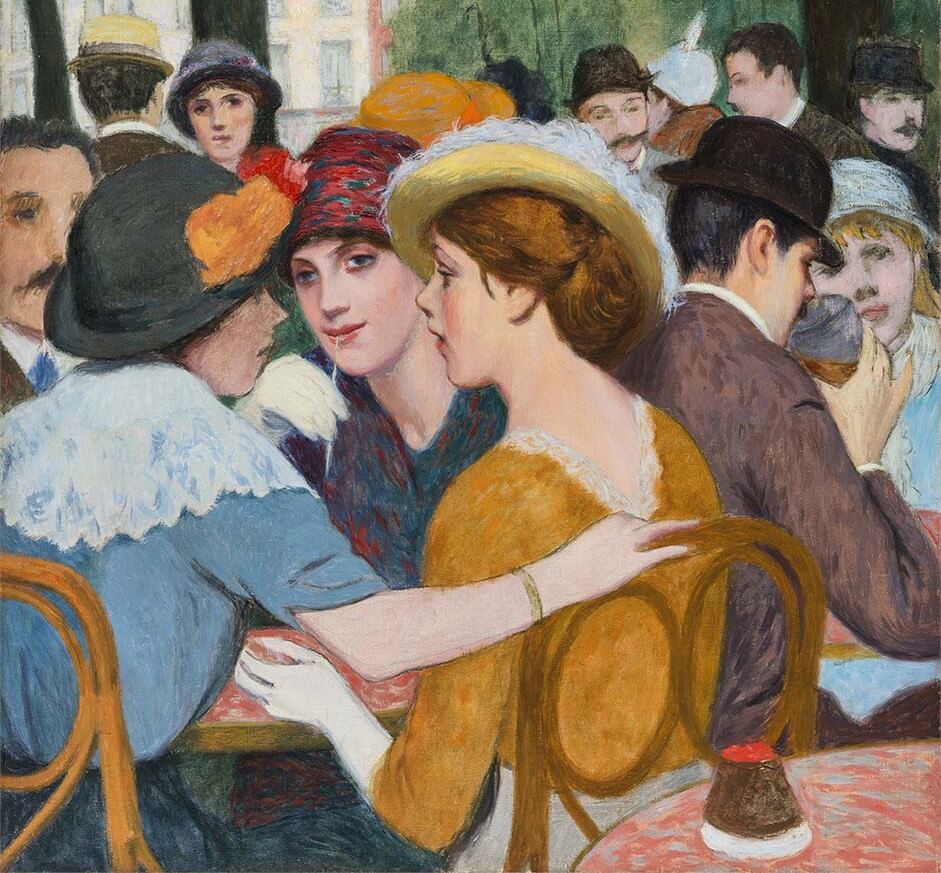
The twentieth century opens for Zandomeneghi with the sign of continuity. Works are produced quickly as we see from the great number of compositions and pastels made during the first decade.
'Conversations' appear often, as well as figures of women with their hair gathered, leaning against a balcony or standing still in front of landscapes in bloom. Zandomeneghi returns with great commitment to canvases animated by many figures. In Le Parc Monceau (c. 1903; private collection), Matinée musicale (c. 1908; private collection), Place Blanche le matin (1911; private collection) and Place Pigalle, the youthful sap of the lively gathering of figures, so dear to impressionist taste, seems to flow in a new way.
Place Pigalle, for example, is distinguished by a balance in the arrangement of the groups, an intentional solidity in the summary of the forms, a calmer elaboration of the gestures studied in contrast; the group of ladies converse amiably in the foreground while a man wearing a hat sips wine behind them. This work demonstrates to how steadfastly the seventy-year-old master refined his research into the reconstruction of reality: a reality that captures him at first glance, but which he then re-elaborates according to his tried and tested stylistic manner.
As in many paintings of the Impressionist period, here too the framing involves unorthodox positions of the figures; the head of the man on the left leaving the visual field, the contrasts of light and shadow enveloping the figures and environment. Clever compositional tricks like these give no only a sensation of spontaneity, of people getting caught in the act of everyday habits, but they also reveal the painter's acumen for capturing even the slightest details in the lives of those around him.
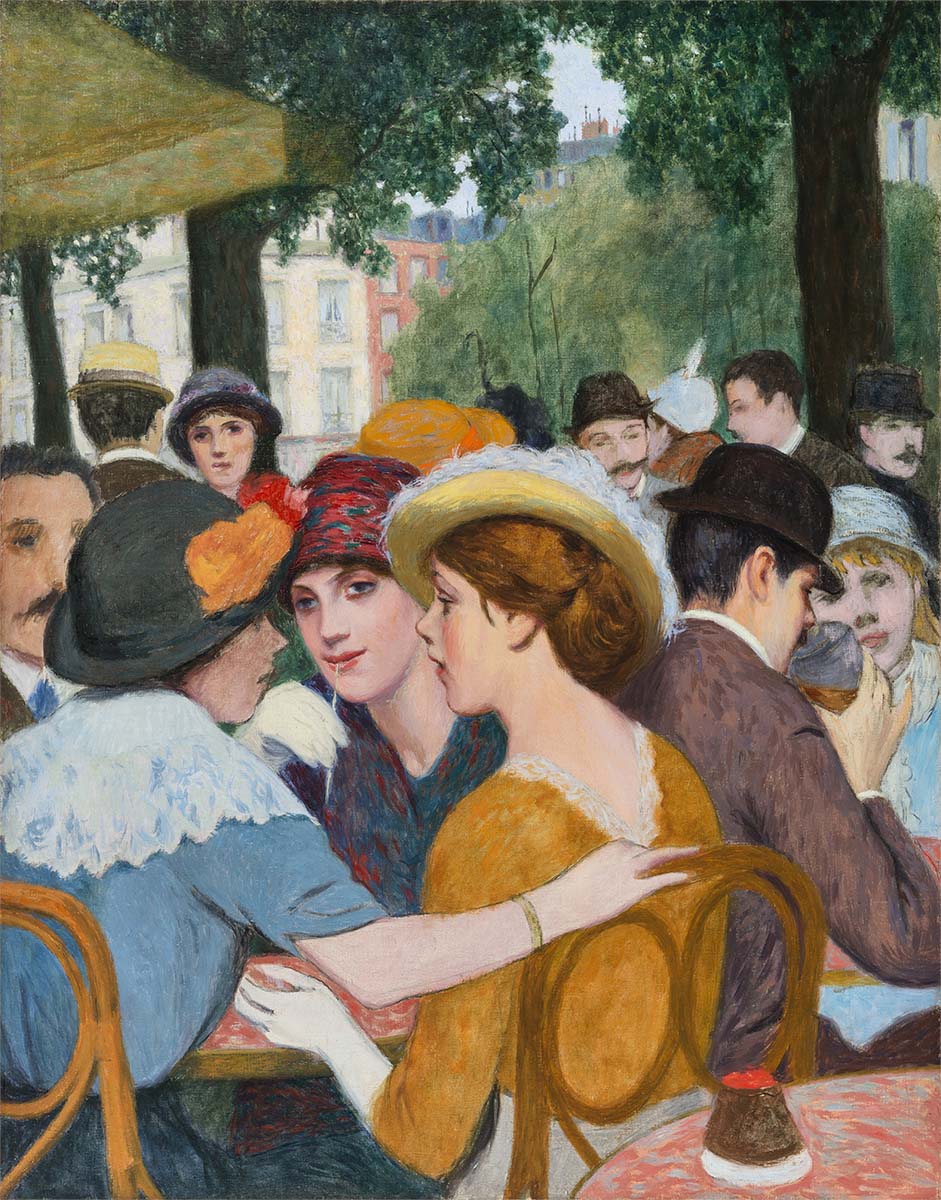
Federico Zandomeneghi
(Venice1847 - Paris1917)
Place Pigalle a Parigi, 1907 circa
Oil on canvas, 92 x 73 cm
Provenance
Angelo Sommaruga, Paris; Maria Caputo Sommaruga, Milan; Ludovico Cartotti, Lessona Biellese; private collection, Biella
